
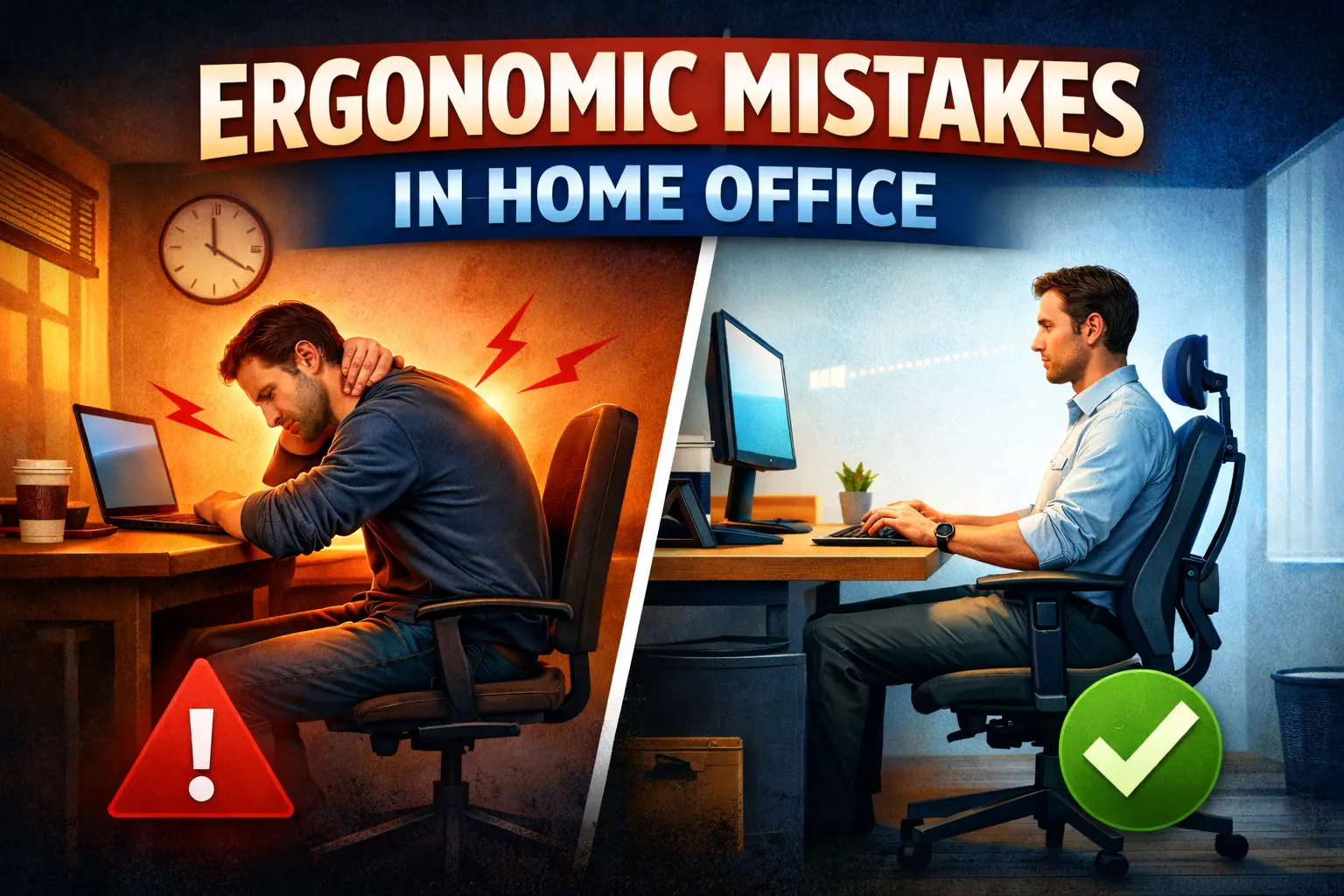
Working from home often never feels harmful to begin with. A chair that appears comfortable, a laptop placed in a spot wherever there is space, and a desk set up at “well enough” soon becomes part of a daily routine. Due to the slow accumulation of discomfort, most ergonomic mistakes in home office setups go unnoticed for years.
The body can adapt, posture will shift without notice, and small strains are easy to ignore or blame on stress or fatigue. Without the immediate pain or external feedback, these problems cannot be seen. By the time of stiffness or recurring aches, poor ergonomics is already such an ingrained habit and not a glaring problem to rectify.
Comfort vs. Ergonomics: Why We Confuse the Two
Comfort and ergonomics are often confused as being the same thing, at least in the case of home office setups. A soft chair, a cushioned seat, or a relaxed posture may feel good in the moment, but comfort is a temporary feeling. Ergonomics, on the other hand, focuses on long-term support and alignment.
Many ergonomic mistakes in home office setups start with the decision to choose what feels good today, but does not protect the body over time. When there is no discomfort to be felt straight away, the set-up feels “right”, even if it encourages poor posture. This confusion helps a subtle strain to slowly build up, and the short-term comfort becomes a long-term problem that goes unnoticed until pain finally acts.
The Slow Nature of Ergonomic Damage
Ergonomic damage rarely announces itself through a sudden pain or obvious injury. Instead, it grows slowly with repeated, everyday, seemingly harmless movements. Sitting slightly hunched over, reaching too far for a mouse, or holding a screen at the wrong height creates little strains that add up over time.
These are some of the ergonomic mistakes in home office setups, which often go unnoticed because the body adapts before it resists. Muscles compensate, posture changes, and discomfort are in the background. By the time stiffness or persistent aches occur, the damage has already progressed. This slow process is making ergonomic problems easy to ignore and hard to relate to their original cause.
Home Offices Lack Natural Feedback Loops
Home offices have none of the natural feedback loops that exist in traditional workplaces. There are no colleagues to see slouched shoulders, no bosses to suggest adjustments, and no scheduled ergonomic assessments. Working alone may keep poor posture and inefficient setups going unabated. Over time, such ergonomic mistakes in home office environments become established since nothing is there to challenge them.
Without observation from the outside world, people are left with just how they feel at the moment, which is often misleading. The lack of reminders or corrective input visually means that problems, no matter how small, go uncorrected. As the days become the years, without feedback, habits are slowly reinforced that put strain on the body.
How Routine Makes Poor Setup Feel “Normal”
Routine has a powerful way of reshaping perception, especially in the home office environment. When the same desk, chair, and screen position are used day in and day out, the body starts to accept them as normal, even when they are in a poor position. Minor discomfort recedes into the background as muscles adjust and posture is unconsciously changed.
These ergonomic mistakes in home office configurations are seldom perceived as incorrect since they are repeated constantly. Familiarity replaces awareness, and you find it more difficult to detect gradual strain. Over time, what started as a little uncomfortable becomes what is expected, and correcting the setup becomes unnecessary or disruptive. This normalization is why poor ergonomics can go unnoticed for years.
Common Ergonomic Mistakes People Don’t Realize
Many ergonomic problems in a home office are not caused by neglect but by small misjudgments that seem to be insignificant. Since the body adapts so fast, such problems often don’t cause immediate discomfort, and so they go unnoticed. Over time, these ergonomic mistakes in home office arrangements contribute to tension, fatigue, and lack of concentration, despite the link not always being apparent.
Commonly overlooked mistakes include:
- Monitor positioned slightly too low or too far away, encouraging neck strain.
- A chair height that allows feet to rest improperly or thighs to angle upward
- The keyboard is placed too high, causing subtle wrist and shoulder tension.
- Mouse positioned beyond comfortable reach, leading to repeated arm extension.
- Sitting for long periods without changing posture or taking short breaks
Individually, these mistakes feel minor. Together, they create a working environment that slowly works against the body rather than supporting it.
Why Pain Often Appears Outside the Workspace
Pain caused by poor ergonomics doesn’t always manifest itself during work hours, making it hard to relate to the setup of the home office. Many people experience stiffness in the neck at night, tension in the shoulders in the morning, or lower back pain on the weekend. Because these symptoms occur away from the desk, they are often attributed to sleep position, stress, or aging.
In reality, the ergonomic mistakes in home office setups put continuous strain on the muscles and joints throughout the day. The body stores that tension and releases it at a later time, when activity ceases. This delayed response disconnects cause from effect, and the real source of discomfort goes unnoticed.
The Psychological Bias That Keeps Us From Fixing It
Psychological bias is a large factor in the continuing ergonomic mistakes when setting up home offices. Many people make the error of thinking that if they don’t feel discomfort yet, then their workspace is good. This “it’s fine for now” mentality puts off corrective action, even with minor strain present. Cost and effort are perceived as complex adjustments to the hesitation, reinforcing inaction.
Further, humans tend to underestimate the long-term effects of small, repetitive stresses and concentrate on immediate comfort. Over time, these biases make poor posture and inefficient setups normal and acceptable. It is important to recognize this mental barrier, as awareness is the first step to change and prevent minor ergonomic mistakes from turning into persistent pain or injury.
When Ergonomic Mistakes Finally Become Visible
Ergonomic mistakes in home office setups are usually not visible until the trigger event brings them into focus. Long working hours, a higher workload, or the aging process may suddenly increase what was previously experienced as a mild or unnoticed discomfort. What initially began as a little muscle tension in the neck, shoulders, or back may become chronic pain, and the link to poor posture or setup becomes obvious.
By this time of age, the body has already adapted to inefficient positions, and correcting them can be difficult. These delayed consequences illustrate the length of time that small ergonomic mistakes can gather silently. Once symptoms arise, they are a wake-up call that leads to the individual looking at their workspace and making proper alignment, support, and posture their top priority.
How Awareness Is the First Ergonomic Upgrade
Awareness is the greatest initial step in correcting the ergonomic mistakes in home office setups. Without paying attention to subtle signs of discomfort, poor posture, or inefficient organizing of workspaces, no amount of equipment or adjustment to work will prevent long-term strain. Paying attention to how the body is feeling during and after work helps to identify patterns of tension or fatigue that may go unnoticed.
Simple observations such as slouching, wrist fatigue, or shoulder tightness can help in making the right changes before the pain becomes persistent. By developing this self-awareness, people can make specific adjustments, try out posture, and slowly build a healthier working environment. In this way, awareness is itself the first ergonomic upgrade, as it provides insight and control over long-term physical well-being.
Conclusion
Ergonomic mistakes in home office environment often continue because they creep up silently and without immediate warning signs. What seems acceptable at the time may gradually become a source of discomfort years later, by which time habits have become well established. The lack of sudden pain coupled with routine and familiarity means that minor setup problems can go unnoticed for far too long.
Accepting that these problems are not sudden but gradual is the first step to change. By listening to the subtle signals from the body and questioning habits that have been with you for a long time, it becomes easier to correct unnoticed mistakes before they become permanent limitations.
FAQs
Why do ergonomic mistakes in home office setups go unnoticed?
Most strains are progressive, and the body adapts before feeling discomfort.
How can I spot ergonomic mistakes early?
Notice recurring discomfort, fatigue, or tension, even if mild or intermittent.
Do small posture adjustments really help long-term?
Yes. The minor changes avoid a cumulative strain and less pain in the future.
Is awareness more important than expensive equipment?
Absolutely. The first step to correcting poor ergonomics at the home office is to recognize strain.
When should I get a professional ergonomic assessment?
If the pain continues or is interfering with daily activity, professional advice can help.