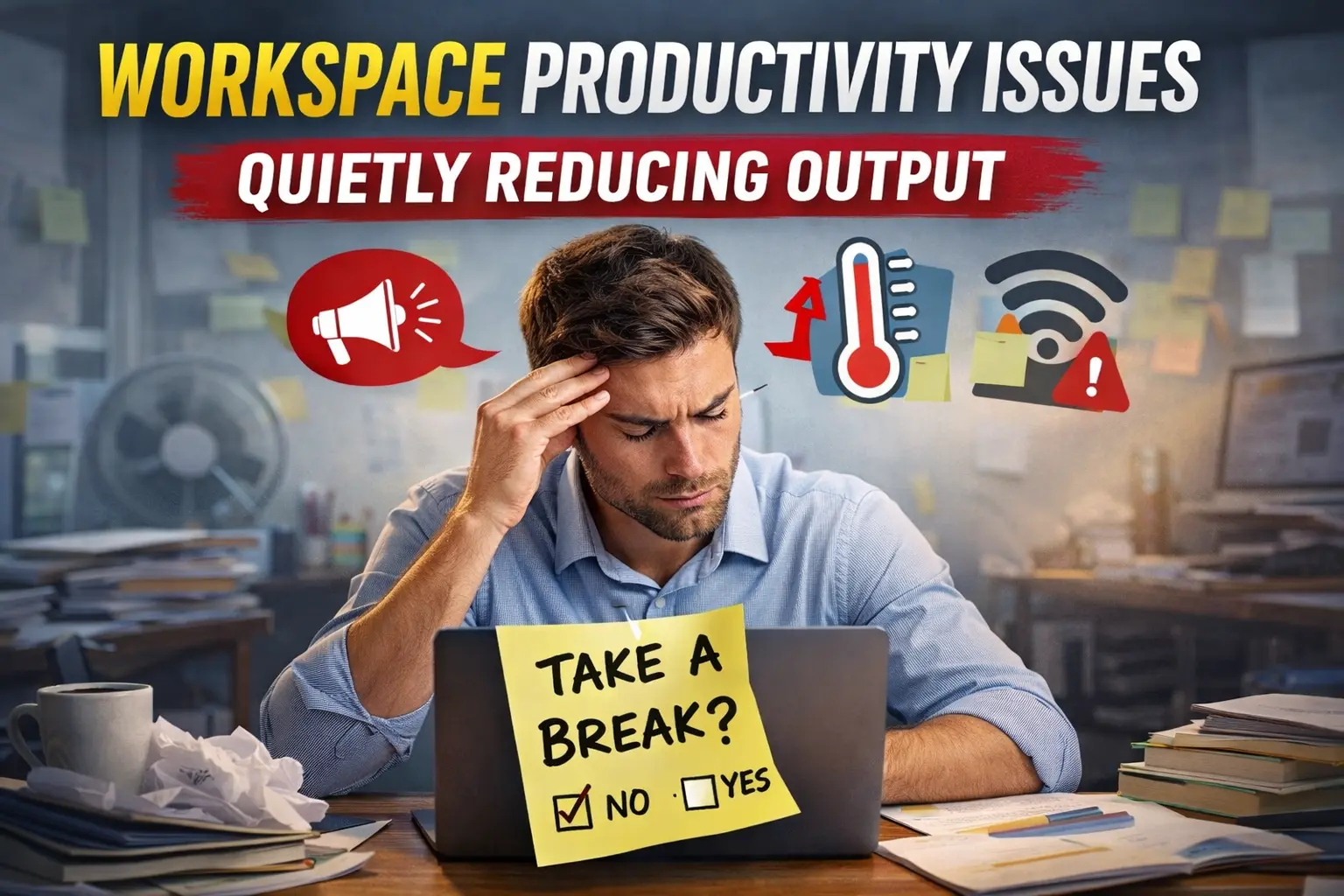
Workspace productivity is often lost because of small and unnoticed issues rather than obvious problems. Many people have become preoccupied with working longer hours or using new tools and pay little attention to how the workspace impacts daily performance. Poor lighting, uncomfortable seating, digital distractions, and background noise can gradually lower focus and efficiency.
These factors may not appear to be significant, but in the long run, they contribute to mental fatigue and reduced output. Understanding the issue of workspace productivity involves focusing on some of the everyday environmental details that shape concentration and work habits. By identifying these quiet issues of productivity, individuals and organizations can improve focus, comfort, and performance overall without making significant changes or adding extra pressure.
Poor Workspace Layout That Disrupts Focus
A poor workspace layout can quietly disrupt focus and diminish overall productivity. When you and your colleagues cannot readily access important tools or feel that your desk layout is congested, workers waste time moving around or searching for items. This constant movement interrupts concentration and leads to increased task-switching, it becomes more difficult to be engaged.
Cluttered layouts also cause visual distractions that vie for attention throughout the workday. Over a long period of time, these minute interruptions accumulate, resulting in mental fatigue and slower completion of tasks. A proper workspace layout helps to ensure a smooth workflow, minimal distractions, and helps to maintain consistency while performing daily work tasks.
Inadequate Lighting and Visual Strain
Inadequate lighting is one of the most common workspace problems that leads to visual fatigue and low productivity. Dim lighting makes the eyes work harder, and too bright or glare can create discomfort and headaches. These conditions make it hard to be focused for extended periods of time, causing frequent breaks and a slower work pace.
Poor light also impacts the visibility of the screen, which leads to higher eye fatigue when performing digital tasks. Over the long term, visual stress may cause a decrease in concentration and motivation that is not immediately apparent. Proper, balanced lighting helps reduce eyestrain, promotes ease of vision, and is instrumental in maintaining consistent workspace productivity.
Constant Digital Interruptions in the Workspace
Constant digital interruptions are a huge threat to workspace productivity. Frequent notifications from emails, messaging apps, and mobile devices interrupt concentration and distract from important tasks. Each time there is an interruption, the brain has to refocus, and this causes much more mental effort and a slower progress rate.
Over the long term, this pattern results in shallow work, lower levels of accuracy, and elevated stress levels. Even short distractions can have a major impact on workflow when they happen over and over again throughout the day. Managing digital interruptions by limiting notifications and setting work periods ensures that attention is protected, tasks are completed more effectively, and productivity is more consistent in the workspace.
Uncomfortable Seating and Poor Ergonomics
Uncomfortable seating and poor ergonomics can quietly destroy productivity in the workspace throughout the day. Chairs that do not provide the right amount of support or desks that are not at the correct height force the body into awkward positions, causing back, neck, and shoulder discomfort. As physical stress rises, concentration naturally starts to decrease, and breaks become more frequent.
Over time, this minor discomfort develops into constant fatigue that makes work less effective and concentration poor. Poor ergonomics also raises the risk of long-term health problems, which will also have an impact on performance. Investing in proper seating and ergonomic alignment helps maintain comfort and is essential for support during posture and the ability to focus for extended periods during the day.
Background Noise and Lack of Sound Control
Background noise and poor sound control can dramatically affect the productivity of a workspace, especially a shared or open one. Conversations, phone calls, office equipment, or outside traffic cause constant auditory distractions that interfere with concentration. Even low levels of noise result in increased cognitive load, which makes it more difficult for us to process information and pay attention to tasks.
Over time, this causes mental fatigue and low levels of work accuracy. A lack of sound control also impacts communication and raises stress levels. Implementing some simple solutions, such as noise-absorbing materials or designated quiet areas, can help create a calmer environment that promotes sustained focus and productivity.
Temperature and Air Quality Issues
Temperature and air quality problems can quietly decrease productivity in the workspace without any immediate notice. Workspaces that are too hot or too cold are hard to concentrate in and cause physical discomfort. Poor ventilation and stagnant air can lead to drowsiness, headaches, and low alertness during the day.
These conditions often result in slower completion of a task and frequent breaks as the body struggles to remain comfortable. Over time, irregular temperature and poor air quality have a negative impact on focus and energy levels. Maintaining proper ventilation levels, temperature levels, and clean airflow helps to create a healthier environment that contributes to consistent productivity and mental clarity.
Lack of Clear Work Boundaries in the Workspace
A lack of defined work boundaries within the workspace can silently destroy productivity. When personal and professional activities overlap, particularly in home or hybrid setups, it is hard to concentrate fully on activities. Constantly switching between work and personal distractions lowers efficiency and increases mental fatigue.
Without specific time frames and designated work areas, employees could find it hard to stay disciplined, leading to longer hours with reduced output. Clear boundaries, such as having schedules and designated zones for work and leisure, help the mind separate the two. Establishing these boundaries helps to protect focus, reduce stress, and help provide sustained work space productivity.
Ignoring Break Patterns and Mental Fatigue
Ignoring the break patterns and mental fatigue can silently devastate the workspace productivity. Many workers try to power through long hours with no breaks in between, thinking that it will increase output, but the opposite often happens. Continuous work strains the brain, resulting in loss of focus, slower decision-making, and more errors. Mental fatigue builds unnoticed and causes diminishing returns upon effort over the course of time.
Including regular breaks, even if they are short, gives the mind a chance to recharge, optimize concentration, and improve efficiency in general. Structured rest periods are beneficial to avoid feeling burned out and maintain consistency of performance, and ensure energy levels are at optimal levels throughout the day, to provide sustained productivity in the work space.
How Small Workspace Changes Improve Productivity
Small changes can make a huge difference in the workspace productivity, thanks to a more comfortable and efficient environment. Simple changes such as decluttering the desk, organizing tools to be easily accessible, enhancing lighting, or adding ergonomic seating help to lessen distractions and physical strain. Controlling noise, managing digitally, and setting up clear boundaries also help to stay focused.
These minor improvements make tasks easier to complete and provide reduced mental fatigue, making for longer periods of deep work possible. Over time, if small and intentional changes are made, they start to add up to a workspace that is naturally conducive to concentration, efficiency, and overall output, and have proven that even meager changes can contribute in a significant way to increased productivity daily.
Conclusion
Workspace productivity is often determined by subtle environmental factors that go unnoticed during daily routines. Issues, including poor ergonomics, constant distractions, poor lighting, and a lack of clarity around work boundaries, may appear trivial, but the cumulative impact may be substantial in terms of the reduction of daily output. Improving productivity does not always involve drastic changes and working longer hours.
Small and deliberate changes to the working environment can help bring back focus, ease fatigue, and enable consistent performance. By acknowledging and mitigating these silent productivity barriers, individuals and organizations have the potential to build healthier, more efficient work environments that promote sustained concentration and improved results over the long term.
FAQs
What is workspace productivity?
Workspace productivity refers to the efficiency and output in an environment for doing work. It is affected by such factors as the layout, ergonomics, lighting, noise levels, and work habits.
What are common issues that reduce workspace productivity?
Frequent issues include bad ergonomics, cluttered layouts, poor lighting, digital distractions, background noise, and a lack of clear work boundaries.
Can small changes really boost productivity?
Yes, even small changes such as repositioning tools, lighting, or noise can go a long way to improve focus and daily output.
Why do digital interruptions affect productivity?
Notifications, emails, and multitasking fragment attention and increase mental fatigue, and slow down task completion, which covertly lowers overall productivity.
How do breaks influence workspace productivity?
Regular breaks prevent mental fatigue, help in maintaining focus, and increase long-term efficiency by allowing the brain to recharge.