The way people work has changed, and so has the way that they work. Traditional home offices used to be built to support fixed schedules and solo work, but modern professionals are more in need of flexibility. This shift has resulted in the emergence of hybrid workspace design, which combines the comfort of remote work with the efficiency of collaborative work.
Unlike a traditional home office, a hybrid workspace is flexible for various tasks, work hours, and technology. It supports concentrated individual work as well as virtual or present collaboration. Understanding the differences between hybrid workspace design and traditional home offices, professionals can create a better work environment that helps them increase productivity, improve comfort, and work better in the long term.
What Is Hybrid Workspace Design?
Hybrid workspace design is a flexible workspace design built to accommodate both the remote and in-office work styles. Rather than a traditional desk setup, multi-purpose spaces, smart technology, and flexible layout are emphasized. A hybrid workspace enables professionals to seamlessly transition between focused work, virtual meetings, and collaborative work.
Comfort, ergonomics, and connectivity are key to this approach. Unlike offices in your home, hybrid workspace design adapts with the changing work needs of your team, and may be suitable for freelancers, remote teams, and hybrid employees alike. Its goal is to increase efficiency without losing balance, mobility, and a more dynamic way of working.
Understanding Traditional Home Offices
Traditional home offices are workspaces set aside for individual, full-time, remote work. They typically have a fixed desk, a chair, minimal storage, and low technology aside from a computer and internet connection. This setup is good for routine tasks that require a long time and lower collaboration.
However, traditional home offices are often not flexible and adaptive. They are not intended for shared use, virtual meetings, or changing work patterns. While they provide privacy and structure, such workspaces can feel restrictive in the long run, especially for professionals who have to juggle between remote work and office-based or collaborative duties.
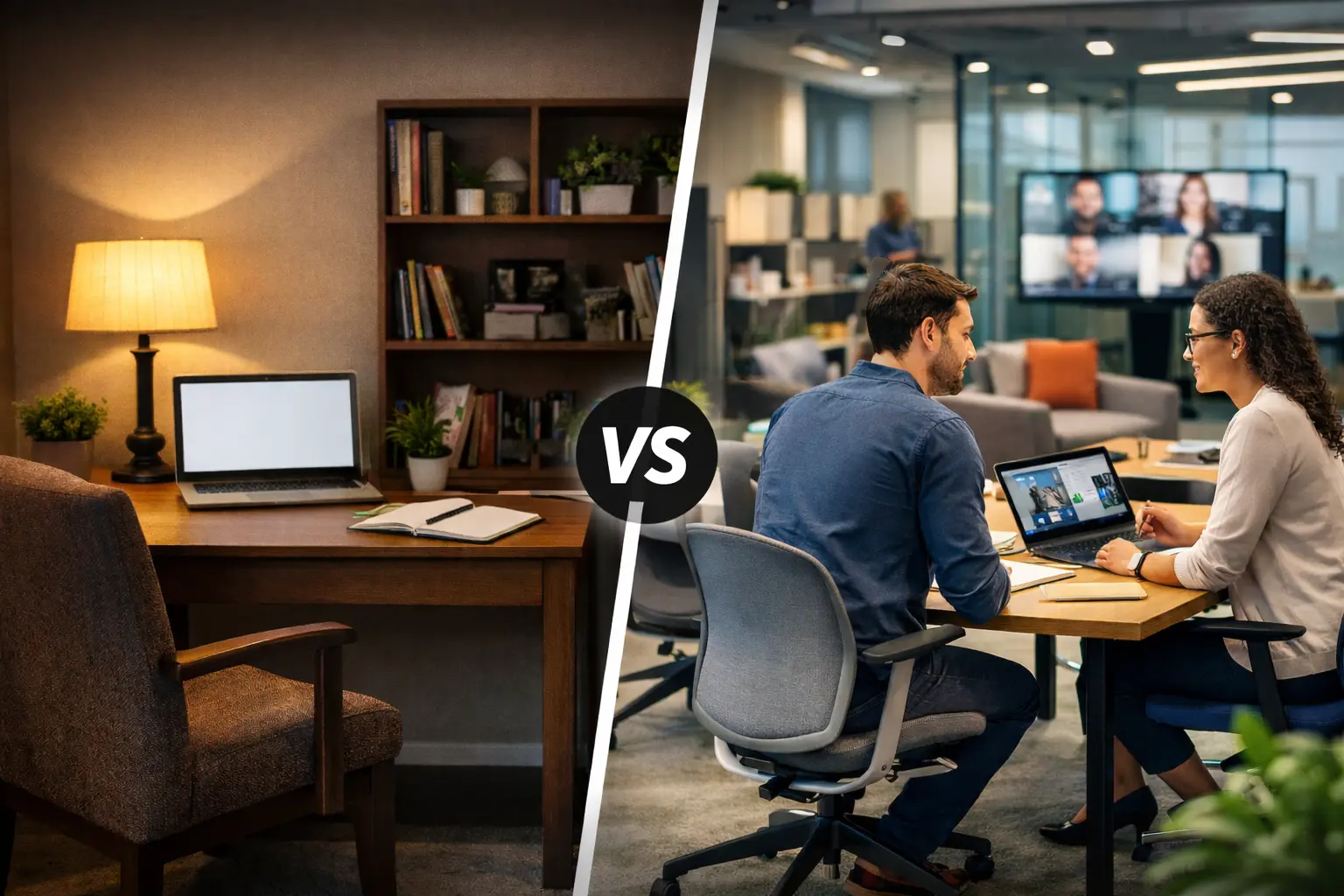
Hybrid Workspace Design vs.Traditional Home Offices
Flexibility and Space Utilization
Hybrid workspace design focuses on flexibility, with movable furniture and multiple-purpose areas that change to suit different tasks. In contrast, traditional home offices are based on a fixed layout with a lack of space utilisation. Hybrid spaces can be rearranged quickly so that they are more efficient for changing work schedules and collaborative needs.
Technology Integration
Hybrid workspace design incorporates the use of advanced technology, including smart devices, docking stations, and video conferencing tools. Traditional home offices typically rely on basic offices with low connectivity. This difference enables hybrid workspaces to facilitate easy communication, virtual collaboration, and efficient task management across different work locations.
Collaboration vs Isolation
Hybrid workspaces design promotes collaboration through supporting virtual meetings, shared tools, and flexible interaction spaces. Traditional home offices are designed for work that is isolated and involves individuals. As a result, hybrid workspaces are more conducive to teamwork and communication, and home offices prioritize privacy and minimal distractions.
Design Philosophy
Hybrid workspace design is a people-first philosophy that focuses on comfort, movement, and adaptability. Traditional home offices tend to focus on function rather than experience, and often focus on desk work alone. Hybrid designs are intended to improve productivity through intelligent layouts, ergonomics, and environments that accommodate different work styles.
Productivity Impact: Hybrid Workspace vs Home Office
Productivity is quite different in hybrid workspaces and traditional home offices. A hybrid workspace design supports task switching by enabling workers to move easily between focused work, virtual meetings, and collaborative work. This flexibility is great for reducing mental fatigue and ensuring that productivity stays consistent throughout the day.
Traditional home offices, although they work perfectly for deep focus, can be a limitation for efficiency when work requires change or collaboration. Hybrid setups also enhance communication and workflow by having better technology integration. Overall, the hybrid workspace design helps to foster balanced productivity by adapting to various tasks, work rhythms, and professional responsibilities, rather than achieving so through a more fixed home office.
Who Should Choose Hybrid Workspace Design?
Hybrid workspace design is perfect for professionals who need to divide up their time between working from home and from the office. Freelancers working with various clients have the advantage of flexible layouts and adaptable technology. Startups and hybrid teams are gaining efficiency through shared spaces that support both solitude and group meetings. Employees who have flexible work hours or who communicate frequently virtually also work well in hybrid settings.
Unlike traditional home offices, hybrid workspace design caters to evolving work patterns, collaborative work, and technology-driven workflows. It is particularly useful for those individuals or entities that wish to improve productivity, ensure comfort, and establish a dynamic working environment that can change in accordance with the individual’s needs or the requirements of their job.
When a Traditional Home Office Still Makes Sense
Traditional home offices are still a viable option for those who are working all the time with little need for collaboration. They are perfect for those who have small spaces, a budget, or little access to technology. Home offices provide privacy, quiet, and a consistent work setup, which is conducive to deep focus and uninterrupted productivity.
For professionals whose work is routine, solitary, or does not require frequent virtual meetings, a traditional home office may be easier, cost-effective, and easier to maintain. While not necessarily offering the flexibility of a hybrid design of workspace, home offices are a stable and comfortable place to allow for a steady work routine and longer-term concentration.
How to Transition From a Home Office to a Hybrid Workspace
Transitioning from a home office to a hybrid workspace starts with evaluating what you need for work, what tasks require collaboration, and what requires focus. Invest in flexible furniture like adjustable desks, movable chairs, and modular storage to create multi-purpose areas. Upgrade technology with docking stations, high-quality webcams, and smart devices to support seamless virtual meetings.
Re-organize your layout by separating individual workspaces from collaborative spaces. Incorporate features that encourage comfort and ergonomics, such as proper lighting and comfortable seating. Gradually adopt new routines that include both solo work and interaction. These steps ensure that the shift will be efficient, productive, and adaptable.
Future of Workspaces: Why Hybrid Design Is Becoming the Standard
The future of workspaces is more of a blend, spurred by rising employee expectations and the need for flexibility. Companies and professionals are looking for work environments that make it possible to work from home and also to work in the office, while not sacrificing productivity or collaboration. Hybrid workspace design addresses these demands with flexible layouts, technology integration, and multi-purpose spaces.
It helps the teams communicate, move, and achieve a better work-life balance. As more and more organisations move towards flexible working hours, the concept of traditional home offices and setups doesn’t stack up anymore. Investing in hybrid workspace design can ensure efficiency in the long term, employee satisfaction, and the capacity to adapt to future work trends.
Conclusion
In conclusion, hybrid workspace design provides a flexible, technology-driven, and collaborative approach that transcends the limitations of conventional home offices. While home offices offer privacy and structure for focused work, hybrid workspaces are adaptable to changing tasks, schedules, and team interactions. They encourage productivity, comfort, and seamless communication with smart layouts and integrated tools.
For those in the professions and organizations involved in the modern world of work, it’s essential to understand these differences. By embracing the design of hybrid workspaces, individuals can create their personal environments to balance focus and collaboration, boost efficiency, and future-proof their work setup, making it a smarter option in today’s evolving professional landscape.
FAQs
What is hybrid workspace design?
Hybrid workspace design is a flexible work environment that incorporates the comfort of remote work with collaborative, in-office work. It focuses on flexible design, technology integration, and multi-purpose spaces to support both individual work and teamwork effectively.
How is hybrid workspace design different from a home office?
Unlike conventional home offices, hybrid workspace design is not static and rigid. It promotes flexibility, collaboration, and technology integration, while home offices are fixed setups focused primarily on individual, solo work.
Who should consider hybrid workspace design?
Freelancers, hybrid employees, startups, and remote teams benefit most from hybrid workspace design, as it supports varying tasks, collaboration, and evolving work schedules.
Can a small home space support a hybrid workspace?
Yes, even small spaces can be designed for a hybrid workspace approach with the use of modular furniture, smaller technology configurations, and multi-purpose areas, to make the most out of the space without needing large rooms.
Is hybrid workspace design expensive to implement?
Costs apply depending on furniture, technology, and layout changes. While the up-front cost may be greater than a traditional home office, hybrid workspace provide the benefits of long-term productivity gains and adaptability.