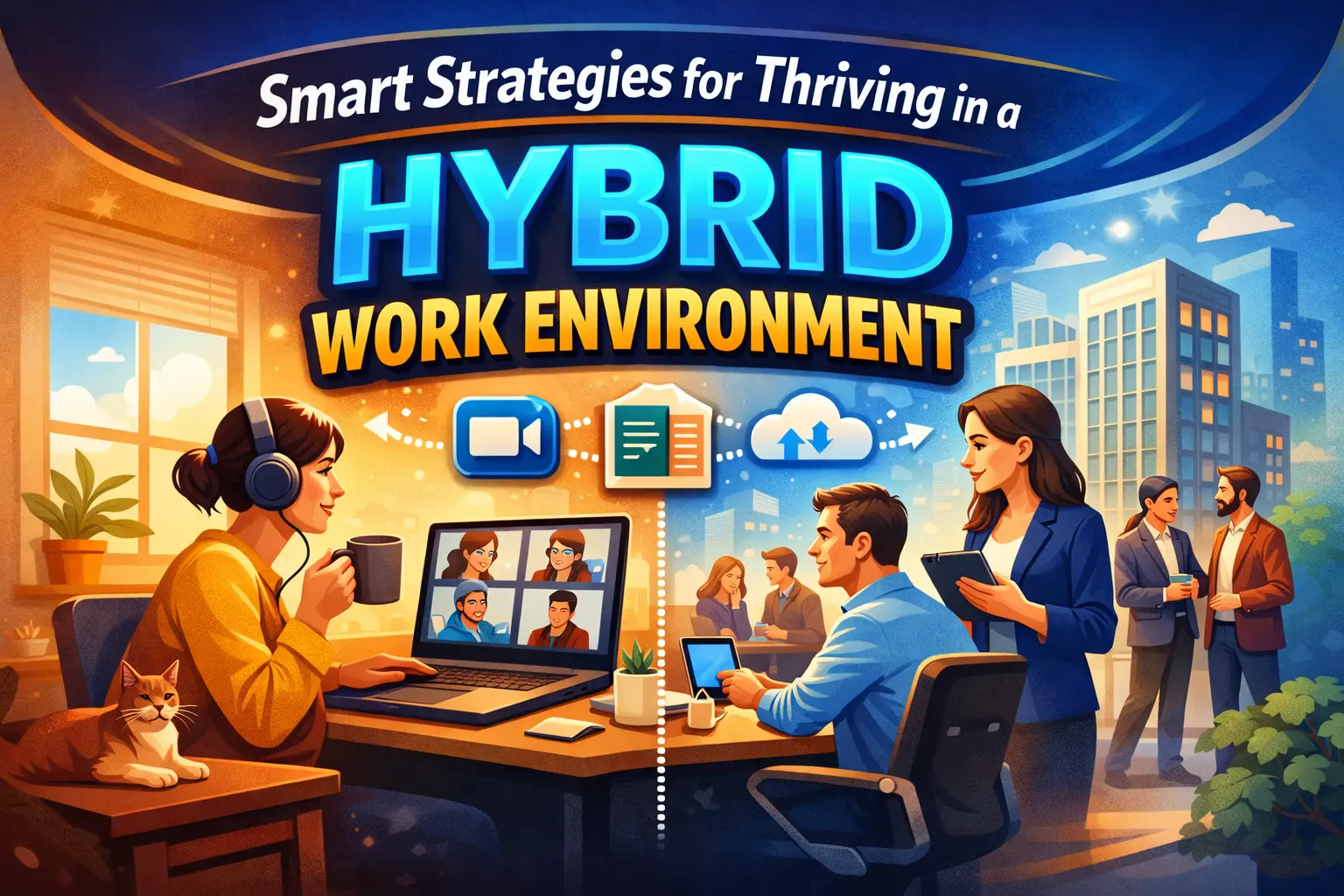
The hybrid working environment has become a model of work for the modern-day workplace. By combining remote work and in-office collaboration, organizations are creating more flexible and adaptable work structures. While there are definite advantages to this approach, like flexibility and a better work-life balance, it comes with a set of new challenges around communication, productivity, and coordination.
Employees need to learn how to handle various workplaces, how to focus, and how to connect with their teams. Thriving in a hybrid work environment requires careful planning, clear routines, and the right tools. With sensible strategies and mindful habits, professionals can stay productive and engaged while enjoying the flexibility that hybrid work provides.
Understanding the Hybrid Work Environment
A hybrid work environment is a model of a workplace that combines remote work with time worked in a physical office. Instead of working from a single location altogether, employees split their schedule between home and the workplace. This model gives organizations the ability to have in-person collaboration while providing the flexibility of remote work.
Different companies have different types of hybrid structures, such as fixed office days, flexible work schedules, or remote-first. Understanding how a hybrid work environment works is beneficial for employees as it helps them adapt to the routines, communication habits, and productivity strategies. By both individuals and teams having a clear understanding of this model, they can work better together and have consistent performance across locations.
Creating a Productive Hybrid Workspace
Creating a productive workspace is key to success in a hybrid work environment. When working from home, it is helpful to have a designated spot that is solely for tasks, so that you are able to focus and be professional. A comfortable chair, correct desk height, and good lighting can help to improve concentration and reduce fatigue in long hours of work.
Keeping the workspace organized also helps to minimize distractions and make it easier to stay on schedule. In addition, reliable technology, such as a stable internet connection and the needed digital tools, ensures smooth communication with colleagues. By setting up a workplace that accommodates both comfort and productivity, employees can remain productive whether working remotely or in the office.
Establishing Clear Work Boundaries
Establishing clear boundaries is important to keep a balance in a hybrid work environment. When work is divided between home and the office, it can be hard to draw the line between professional responsibility and personal time. Setting defined work hours helps avoid overworking and allows employees to perform a healthy routine. Establishing a consistent start and end time for the workday can help increase focus and productivity.
It is also important to be able to communicate availability clearly with colleagues and managers. By establishing boundaries on the time and location of work, individuals can preserve their personal time while still being fully engaged and effective during working hours in a hybrid work environment.
Communication Strategies for Hybrid Teams
Effective communication is vital to achieving success in a hybrid work environment, where team members can be working in different locations. Clear and consistent communication is important to avoid misunderstandings and keep everyone on the same page when it comes to tasks and goals. Teams should use a combination of communication methods, such as video meetings, messaging platforms, and shared documents, to stay in touch.
Regular check-ins can also help managers and employees stay updated on progress and challenges. Encouraging open communication ensures that workers who are remote and in the office have the same information. When teams focus on clarity, responsiveness, and collaboration, they can ensure they stay coordinated and productive even when they work across multiple locations in a hybrid work environment.
Staying Connected with Your Team
Staying connected with colleagues is a crucial element of succeeding in a hybrid working environment. When working with team members from various locations, it is important to regularly interact with each other in order to maintain collaboration and trust. Scheduling in team meetings, virtual check-ins, and informal conversations can help to strengthen relationships and ensure that everyone feels included.
Digital collaboration tools are also making it easier to share updates, discuss ideas, and work together on projects. Managers should encourage open communication so that remote and office-based employees are equally engaged. Through the efforts of making consistent efforts to connect, teams can build a supportive work culture and maintain a strong level of cooperation even though they are not always working in the same place.
Managing Productivity in a Hybrid Work Environment
Managing productivity in a hybrid work environment involves finding a balance between flexibility and accountability. Employees frequently work in varying settings, so it becomes necessary to have clear goals and priorities. Focusing on outcomes instead of hours spent can help individuals stay motivated and organized. Making daily task lists, using time management techniques, and keeping distractions to a minimum can increase efficiency.
Regular updates on progress also help teams stay aligned and ensure work progresses smoothly. Employers can support productivity by giving the appropriate tools and expectations. When people take responsibility for their schedules and goals, they can be productive and perform well in a hybrid working environment.
Technology That Supports Hybrid Work
Technology is an integral part of ensuring that a hybrid work environment is an efficient and connected one. Digital tools make it easy for employees to work together seamlessly, whether they work from home or from the office. Video conferencing platforms enable teams to meet and have contact with each other in person, despite being located in different locations.
Project management software can be used to help organize tasks, track deadlines, and keep everyone informed about the progress of the project. Cloud storage and shared documents also make it easy for teams to access files and collaborate in real-time. By using reliable technology and communication tools, organizations can support teamwork, improve coordination, and keep productivity going in a hybrid work environment.
Overcoming Common Hybrid Work Challenges
Working in a hybrid work setting presents its own set of challenges that must be addressed with proactive solutions. Communication gaps may arise when team members are divided between remote and office locations, so clear messaging and regular updates are key. Unequal access to information could leave remote employees feeling disconnected, and shared platforms and transparent workflows are vital.
Meeting fatigue can contribute to a lack of engagement, so it’s important to schedule thoughtful and purposeful meetings to keep the energy going. Maintaining focus at home also means reducing distractions and establishing set routines. By recognizing potential barriers and adopting strategies such as effective communication, balanced schedules, and organized workflows, employees and managers can overcome common challenges of hybrid work successfully.
The Long-Term Benefits of a Hybrid Work Environment
A hybrid work environment has massive long-term benefits for both employees and organizations. Flexibility in work location enables people to balance their work duties with personal lives, lowering stress and being much better overall. Not only that, but the employees often see higher levels of job satisfaction and loyalty, which in turn can lead to lower turnover rates.
Organizations benefit from higher levels of productivity, as team members are able to work in environments that are best suited to their focus and energy levels. In addition to this, hybrid models also have the ability to lower overhead costs and increase talent pools through remote hiring. In the long run, embracing the hybrid work model creates a more flexible, motivated, and resilient workforce.
Conclusion
Thriving in a hybrid work environment requires intentional strategies and clear routines, and leveraging technology effectively. By having designated workspaces, setting boundaries, and having open communication, employees can remain productive and engaged both in the office and at home. Using digital tools and collaborative practices has ensured teams stay connected and aligned, and overcome typical challenges such as distractions, meeting fatigue, and communication gaps. With conscious habits and strategic planning, the professionals can take full advantage of the flexibility and benefits of hybrid work. Ultimately, there is success in this environment due to balancing structure, collaboration, and adaptability for long-term growth and satisfaction.
FAQs
What is a hybrid work environment?
A hybrid work environment is a type of work environment that blends remote work and in-office work, allowing employees to divide their time between home and the workplace to achieve flexibility and collaboration.
How can I stay productive in a hybrid work environment?
Focus on goal-setting, set up a designated workspace, limit distractions, use digital productivity tools, and establish regular routines to balance remote and office tasks.
What are the common challenges of hybrid work?
Communication gaps and a lack of equality of information, meeting fatigue, and distraction at home are some common problems for hybrid teams.
How can teams stay connected in hybrid work?
Regular check-ins, video conferencing, collaboration tools, and informal virtual interactions help to keep communication, teamwork, and company culture strong.
What tools support hybrid work environments?
Project management software, video conferencing platforms, cloud storage, and messaging apps help to ensure a smooth collaboration and workflow management across different locations.