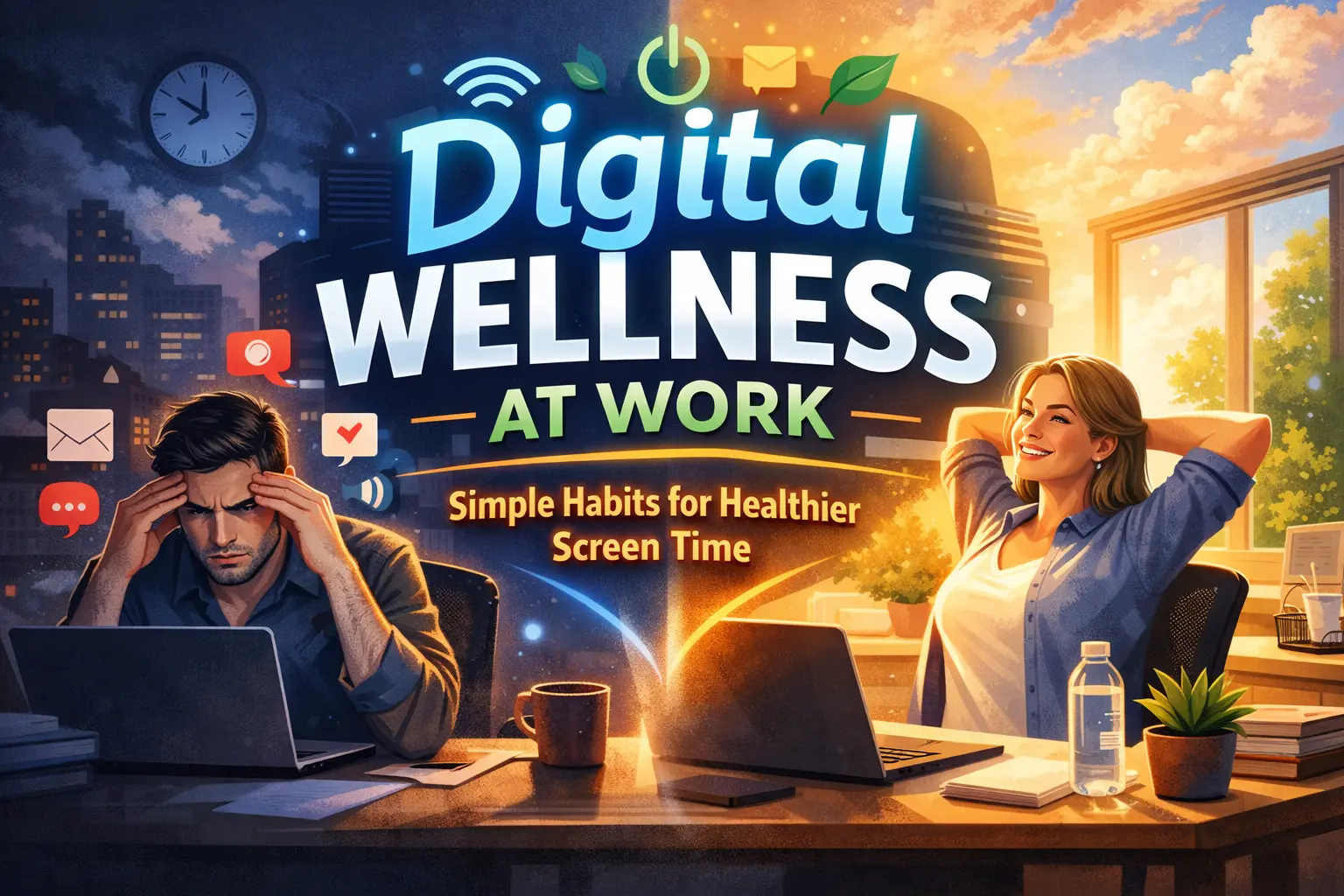
Digital screens have become an integral part of working life. From virtual meetings to being constantly accessible through email, the modern working day is often conducted almost entirely through digital devices. While technology makes things more efficient, it can have a quiet impact on focus, posture, and overall well-being when exposed to a screen for long periods of time.
Digital wellness at work involves creating healthier relationships with these tools, instead of eliminating them. By making small and mindful changes, employees can reduce fatigue, maintain their attention, and keep the day in balance. Understanding the physical and mental consequences of daily screen use is a first step to developing a more sustainable and comfortable work routine.
The Growing Role of Screens in Everyday Work
Screens have become the centre of nearly every facet of modern work. From laptops and tablets to smartphones and multiple monitors, professionals spend the majority of their day interfacing with digital devices. Communication, collaboration, data analysis, and project management are increasingly done using screen-based tools, making them an indispensable part of most workplaces.
While this technology makes work more efficient, it also lengthens work hours and blurs the boundary between personal and professional life. The increasing reliance on screens has made it more important than ever to understand the impact of prolonged screen use on focus, energy, and overall health, and the need for digital wellness at work.
What Digital Wellness at Work Really Means
Digital wellness at work is not just about limiting screen time, it is about striking a balance and having an intentional relationship with technology throughout the day. It is known that how long you use devices affects your mental and physical health, such as focus, stress levels, and posture.
Practicing digital wellness involves developing strategies that help and are conducive to productivity while reducing fatigue and strain, such as having structured breaks, mindful notifications, and ergonomic changes. It encourages employees to use digital tools effectively without becoming masters and controllers of attention and well-being. Ultimately, digital wellness at work promotes a sustainable and healthier way of dealing with the demands of modern screen-centred jobs.
How Continuous Screen Use Affects Focus and Energy
Prolonged screen use can be a silent focus and energy drain throughout the workday. Constant exposure to digital devices means the brain is always at a heightened state of alertness, which makes it more difficult to focus on individual tasks. Multitasking between apps, notifications, and emails fragments attention, slowing cognitive processing and causing increased mental fatigue.
Physically, staring at any screen for long periods of time can cause eye strain, tension headaches, and postural discomfort, all of which further deplete energy. Over time, these effects add up, so overall efficiency and resilience are diminished. It is important to realize the effects of the constant use of the screen in order to adopt habits for the sake of both mental clarity and daily energy.
Visual Strain and Physical Discomfort in Screen-Based Jobs
Even extended time on screens can lead to much visual stress and physical discomfort to the eyes and back of the neck, which is another dilemma associated with the modern work environment. Staring at the monitors for hours may cause fatigue, dryness, blurred vision, and headaches. Poor posture, insufficient seating, or poorly positioned screens, these add tension to the neck, shoulders, and back, adding to physical strain.
Even subtle problems such as glare or poor lighting can contribute to eyestrain and discomfort. Supporting digital wellness at work by making ergonomic changes, using monitors correctly, and taking frequent visual breaks addresses these factors. Small changes in the work environment can go a long way, helping to minimize fatigue, increase comfort, and improve long-term health in screen-focused professionals, as noted in studies on screen health.
Managing Digital Interruptions Without Losing Productivity
Digital interruptions, including constant notifications, emails, and instant messages, can fragment attention and reduce productivity if not managed. Each alert, even if it is just for a few seconds, changes the brain’s attention and increases mental fatigue over time. Managing these interruptions involves intentionally using strategies such as turning off notifications for non-essential messages, setting aside times to check emails, or using focus modes on devices.
By regulating when and how digital information is processed, employees may ensure that the workflow is maintained without always being dragged in multiple directions. These are small changes that can help to keep concentration, reduce stress, and contribute to digital wellness at work so that they can be effective while reducing the cognitive cost associated with constant connectivity.
Movement and Posture in a Screen-Centered Workday
Sitting for prolonged periods of time in front of screens can cause muscle tension, poor circulation, and long-term postural problems. Incorporating movement throughout the workday is critical to sustaining physical health and supporting digital wellness at work. Simple practices, like standing while on the phone, stretching in between tasks, or going for short walks, help to reduce stiffness and increase energy.
Proper posture, keeping the spine aligned, shoulders relaxed, and screens at eye level, further reduces stress to the neck and back. By using mindful movement and ergonomic awareness together, employees can offset the physical challenges of working at a screen and maintain comfort and focus throughout the day.
Setting Healthy Boundaries Around Work-Related Screen Time
Having clear boundaries when it comes to work-related screen time is critical when it comes to protecting one’s mental and physical health. Without limits, work can easily seep into personal time, causing fatigue and stress, and interrupted sleep patterns. Setting defined start and end times to tasks, turning off notifications that are not essential for an hour, and having device-free time are helping to create a healthier divide between work and personal life.
These practices allow the brain and body a break from the demands of the digital and still be productive during work hours. Over time, setting mindful boundaries helps you maintain focus, minimize burnout, and boost overall well-being. These practices strengthen long-term digital wellness and create a healthier work environment.
Building Sustainable Digital Habits Over Time
Developing sustainable digital habits takes consistency and an observational way of mind. Small and intentional changes, such as creating structure around screen time, taking regular breaks, managing notifications, and promoting ergonomics, can over time become part of a healthier routine. Over time, these practices help to reduce mental fatigue, eye strain, and physical discomfort and contribute to focus and productivity.
Sustainable habits also mean setting realistic limits around work-related screens and getting movement in throughout the day. By addressing digital wellness in the workplace as a continuous process rather than a one-off adjustment, employees can ensure that they develop a healthy relationship with technology that encourages long-term well-being, resilience, and efficiency in screen-focused professional environments.
Conclusion
Digital wellness at work is not the outcome of extreme changes or severe constraints on technology. It is built through awareness, consistency, and simple changes daily that help not only productivity, but also well-being. When screen time is structured, interruptions are dealt with and physical movement encouraged, work is less mentally and physically demanding.
Such habits help to reduce strain while allowing digital tools to remain effective and helpful. Over a period of time, an awareness of screen usage leads to a healthier work rhythm, whereby it is easier to focus on work, relax, and be involved in your work throughout the day without being overwhelmed by the fact that you are constantly being exposed to digital media.
FAQs
What does digital wellness at work mean?
Digital wellness at work is a reference to having a healthy and balanced relationship with digital tools during working hours. It is mainly concerned with reducing physical strain as well as mental fatigue and attention overload due to prolonged screen usage while being able to support productivity and job performance.
Why is digital wellness important in office environments?
Office environments can typically be characterized by prolonged exposure to screens and reduced movement. Without mindful habits, this can contribute to eye strain, poor posture, reduced concentration, and work-related stress. Digital wellness is a way to help minimize these risks through intentional screen usage and healthier routines.
How much screen time is considered unhealthy at work?
There is no one-time limit that is the same for all. The problems tend to occur when the use of the screen is continuous and without breaks. Regular breaks and changes to your posture and visuals are more significant than how many hours you are in front of a screen.
Can digital wellness improve productivity?
Yes. When digital habits are put into a structure, it can often lead to improved focus and less fatigue for employees. Fewer distractions and intentional screen use can result in more effective thinking, work completion, and work sustainability.
Is digital wellness only relevant for remote workers?
No. While remote workers may be exposed to more screen time, digital wellness at work is as relevant to office-based, hybrid, and on-site employees. Any job that involves a lot of digital devices can be improved with better screen habits.