Working from home has forced many people to re-examine the use of their living space, especially when space is at a premium. In small and modern homes, a home office needs to do more than look good; it should feel comfortable, efficient, and responsible in the way that it uses resources. Making thoughtful choices surrounding materials, layout, and energy consumption can have a noticeable impact on both the daily productivity and the cost over time.
This is where eco friendly home office ideas come especially into play, in that you are concerned with reducing waste and creating a space where you can work with focus. With the right balance, even a small corner can be turned into a workable space that fits in with today’s design and sustainable living values.
Why Sustainability Matters More in Small Home Offices
Sustainability is also especially important in small home offices because each and every design and usage decision takes on a more immediate impact. In a limited work space, poor ventilation, inefficient lighting, or materials can have a fast effect on comfort, focus, and overall well-being.
Unlike larger rooms, small offices tend to trap heat, dust, and pollutants to a greater degree, which makes decisions about materials and especially the layout of the small office essential, not optional. Another important factor is energy consumption. Small offices are often artificially illuminated and use electronic equipment for extended hours, which can result in a lot of wasted power if efficiency is not considered.
Sustainable choices that help lower this daily energy load and maintain the functionality of the workspace. Additionally, small spaces promote mindful consumption. Choosing more long-lasting, fewer items than we tend to replace frequently reduces waste and promotes a cleaner, better-organized environment. Over time, these choices build a work environment that is not only better for the environment but also more comfortable and cost-effective to use.
Choosing Eco-Conscious Furniture Without Overcrowding
Choosing furniture for a small home office involves more than choosing pieces that will fit in the room. Eco-conscious choices are about quality, durability, and purpose, which is a natural way of not overcrowding. Furniture made from responsibly sourced wood, recycled materials, or low-impact finishes often focuses on thoughtful design rather than excess.
This makes it easier to pick things that serve more than one purpose while maintaining the visual balance of the space. In small working spaces, fewer well-made items are often more effective than saturating the room with a bunch of items that do little for you.
A desk with inbuilt storage or a chair that is designed for long-term use means that you will need to replace it less often, decreasing the amount of rubbish and money being spent over time. By focusing on eco friendly home office ideas that favor simplicity and long-lasting materials, small offices can be kept open, comfortable, and in line with sustainable living principles without feeling cramped and cluttered.
Natural Light, Energy Efficiency, and Smart Layout Planning
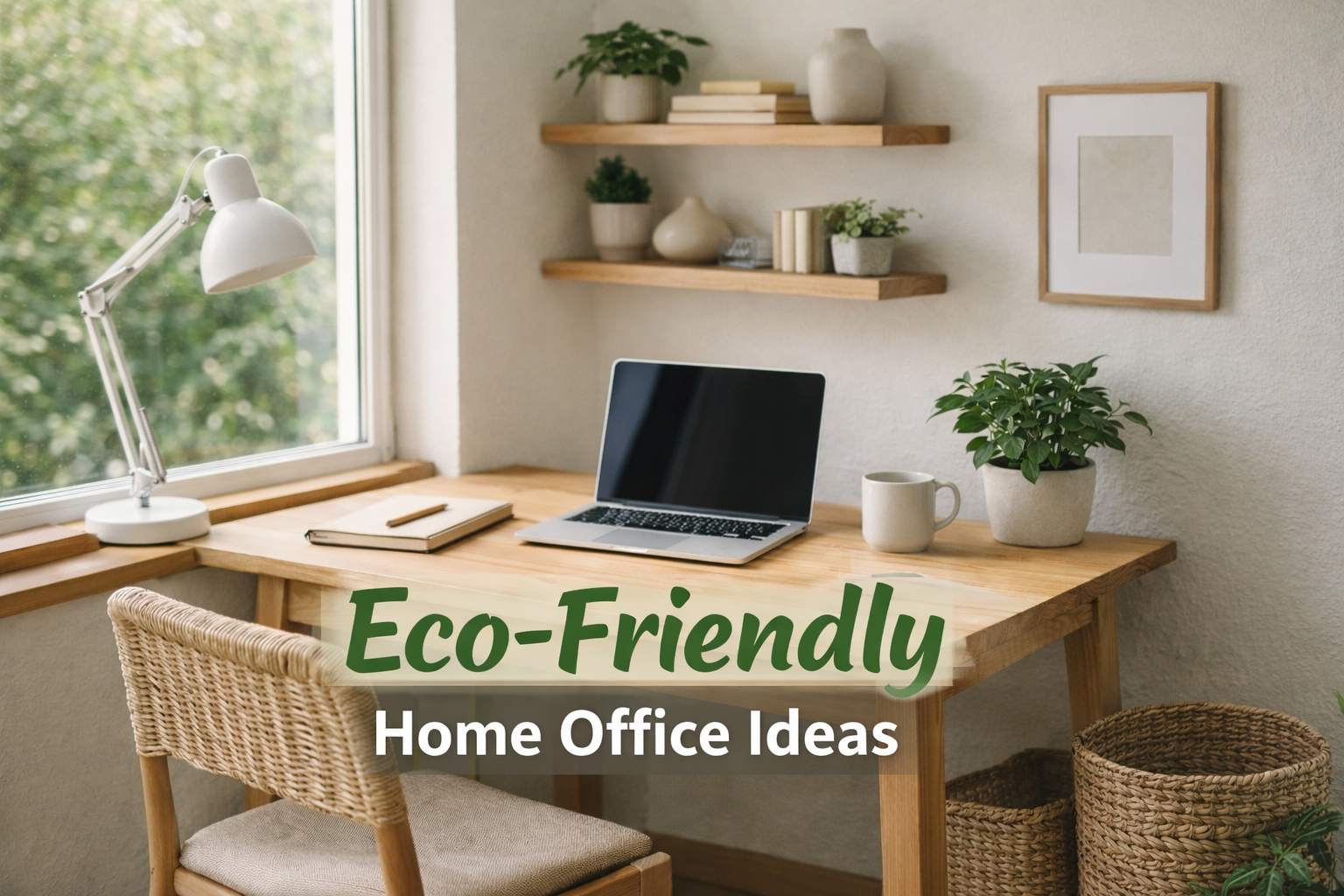
Natural light is the key to the openness and efficiency of a small home office. When a workspace is designed with the idea of using the available daylight, the need for artificial light is minimized, and therefore, energy is saved during the workday. Simple layout changes, such as putting the desk near a window or light colored surfaces, can reflect the light better in small rooms.
Energy efficiency is also influenced by the positioning of the equipment and furniture. A well-designed layout ensures proper air flow and prevents heat from accumulating around electronic devices. In small and modern spaces, smart layout planning is good for comfort and sustainability by making better use of what’s already there, instead of needing to add more energy or infrastructure that we don’t need.
Improving Indoor Air Quality in Compact Workspaces
Indoor air quality is something that has often been ignored in small home offices, but it can have a tremendous effect on comfort, focus, and overall health. In small spaces, pollutants from paints, furniture finishes, and electronic products can be concentrated at a faster rate than in larger rooms.
Choosing natural or low-emission materials to reduce the occurrence of these harmful particles, and proper and regular ventilation to ensure a proper circulation of fresh air. Adding plants or air-purifying elements can further improve the air quality without taking up much space.
Even simple things, such as opening windows periodically or not letting stuff clutter up the place, so dust can hide away, help a lot. By making cleaner air a priority in smaller workspaces, homeowners get to develop a healthier and more productive space, while still incorporating eco friendly home office ideas and providing an improved level of both comfort and well-being.
Sustainable Storage and Minimalist Organization
Sustainable storage and minimalism go together for designing a small, sustainable office at home. In a small place, clutter will not only restrict functionality but also encourage the temptation to buy things you do not really need. For this, choosing storage solutions made out of recycled or responsibly-sourced materials allows for minimizing the impact on the environment while keeping the workplace tidy.
By buying things that are needed only, mindful consumption is encouraged, and there is no overcrowding. Multi-functional storage, for example, shelves used as display areas or cabinets which double as seating areas, maximizing the usability without additional furniture. Simple organizational habits such as reusing containers and putting supplies in designated places contribute to efficiency and sustainability. By practicing minimalist organization and making eco-conscious choices, even the smallest home office can be kept in order, practical, and environmentally responsible.
Practical Eco Habits That Support a Greener Workday
Practicing some practical eco habits in a home office would make a real difference, even if it’s a small office. Simple measures, such as turning off electronics when not in use, using energy-efficient lighting, and reducing unnecessary printouts, help reduce the amount of daily energy use.
Mindful purchasing is also a very important thing, you buy long-lasting and reusable supplies instead of disposable items, which goes further with the cause of sustainability and reduces waste products. Organizing the workspace so that it is not cluttered up also leads to careful use of resources, as it is easier to see what is actually required.
Incorporating little rituals like refilling water bottles instead of single-use plastics or readjusting blinds to let in as much natural light as possible strengthens eco-friendly routines. Over time, these small but consistent eco habits grow to a greener, healthier, and more productive home office environment.
Conclusion
Creating a small home office that is modern and environmentally responsible can be done with careful planning and is not difficult. By focusing on sustainable furniture and efficient layouts, natural light, and mindful everyday behaviours, even small spaces can be comfortable, productive, and eco-friendly. Missing out on quantity in favor of quality, and more thoughtful organization, reduces clutter and contributes to long-term sustainability.
Small changes like improved air quality, maximum energy efficiency, and minimalist storage make a significant difference. Ultimately, by accepting these eco friendly home office ideas, individuals have the opportunity to work with the environment, not against it, and create a space that is not only styled with the feel of modern design but also conscious living.
FAQs
Are plants useful in a home office?
Yes. Plants improve air quality, reduce stress, and use natural elements to make the workplace a healthier and more sustainable environment.
What kind of storage is best for small eco-friendly offices?
Minimalist and multi-purpose storage produced from sustainable materials is best. Keeping things to the essential ones keeps the clutter away and also avoids wastage.
How can I reduce electricity usage in a compact workspace?
Turn things off when they are not in use, use energy-efficient light bulbs, and hang furniture to permit the greatest amount of natural light and air.
Can a small home office improve productivity while being eco-friendly?
Yes. A well-organized, energy-efficient and clean environment provides for increased focus, comfort and long-term health.
What daily habits support a greener workday?
Switch things off when they’re not in use, minimize your paper waste, fill up your own bottles instead of buying them, and make a conscious effort to organize your supplies in order to reduce clutter and consumption.