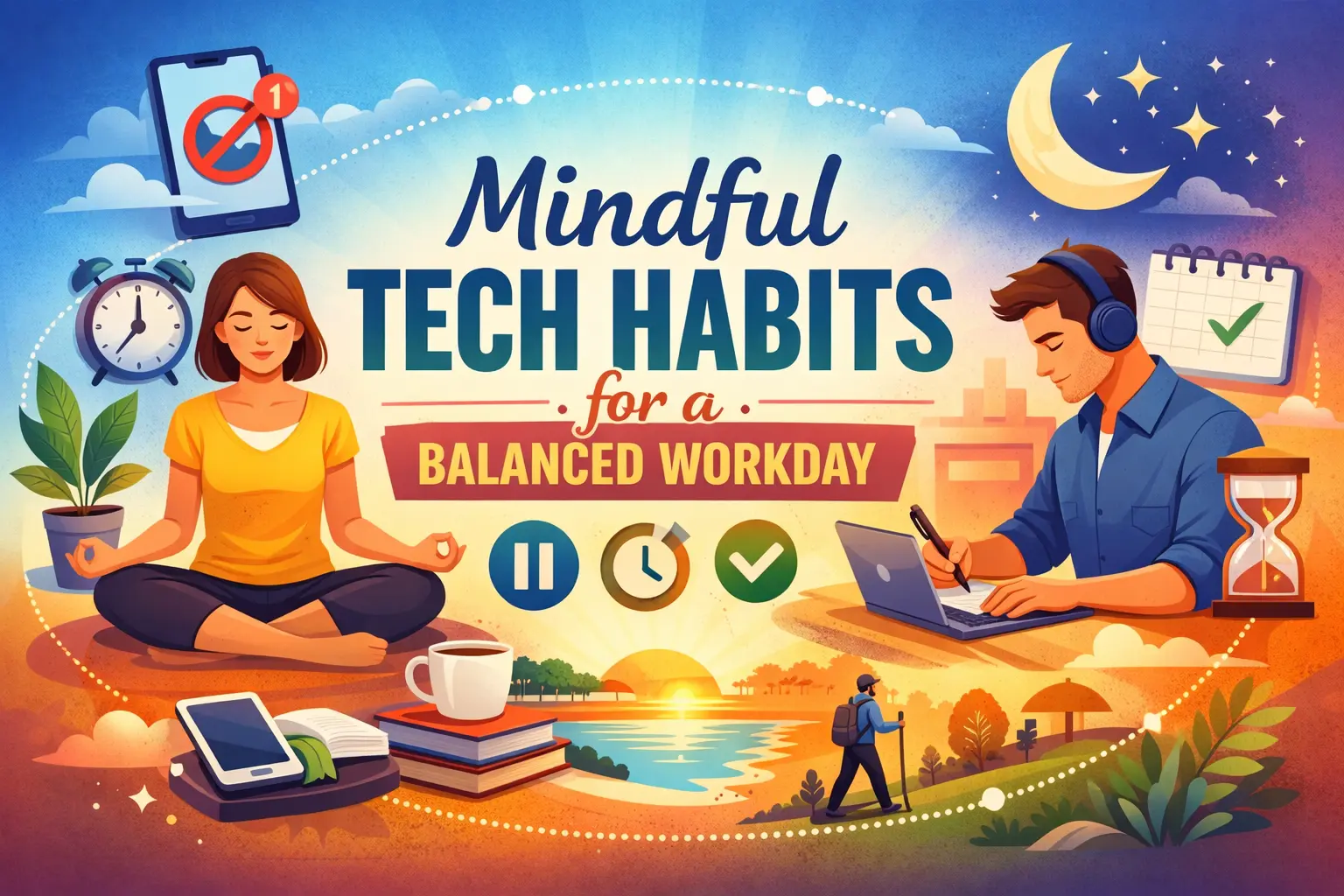
A balanced working day isn’t about managing tasks anymore, it’s about managing technology. From constant notifications to endless tabs, digital tools may stealthily fragment attention and consume mental energy. This is where mindful tech habits come in. Instead of allowing devices to control your pace, mindful use involves having clear intentions about when, why, and how one uses technology during work hours.
By being more mindful of digital activities, professionals can alleviate stress, improve focus, and establish a better balance between work and well-being. Small changes, such as limiting background apps, scheduling checks of messages, or taking screen breaks, can make a noticeable difference in performance and mood.
In a world where work and screens are inextricably intertwined, developing tech habits around mindfulness isn’t about rejecting technology, it’s about using technology with purpose. The result is a workday that is more controlled, less chaotic, and much more sustainable in the long run.
Why Mindful Tech Habits Matter
Mindful tech habits are important because how we engage with digital tools directly influences concentration, stress levels, and our work performance in general. Constant notifications, app switching, and information overload can fragment attention, leading to less cognitive efficiency, and even simple tasks can take longer than they should.
When technology is used blindly, many times it results in digital fatigue, brain clutter, and a feeling of being busy but not productive. Practicing tech habits to be mindful is more helpful to regain control by using technology intentionally rather than impulsively checking or scrolling. This shift gives the brain the ability to concentrate deeply, enhances decision-making, and helps with emotional balance during challenging workdays.
It also prevents the risk of burnout from constantly being digitally stimulated. Ultimately, it’s not about restricting technology, but about making it work with your priorities, so that your devices are your friends as supportive tools, rather than constant distractions competing for your attention.
Start Your Day with Intentional Digital Practices
Making a point of setting up your digital practices first thing in the morning sets the tone for the effect technology will have on your focus and energy. Instead of checking emails or scrolling through notifications right when you wake up, start with a brief window without device usage to plan your priorities and mentally prepare yourself for the day.
This simple pause helps you be deliberate about technology instead of being reactionary to every alert. Once you do log in, check only vital messages and mute non-urgent messages to safeguard your concentration. Setting clear goals before opening apps helps you make sure that every digital interaction helps your workflow rather than distracting from it.
Many professionals find that setting aside scheduled times for email or messaging prevents constant email or messaging interruptions for efficiency. By having control over how and when you interact with your devices in the morning, you gain control over your attention and more easily maintain steady productivity and a calmer head for the remainder of your working day.
Creating Structured Tech Breaks
Creating structured tech breaks is essential in staying focused and not becoming digitally fatigued during the workday. Continuous screen contact can cause the eyes to be strained, the ability to concentrate to be reduced, and mental exhaustion to be increased, especially if the tasks require paying attention for long periods.
By scheduling in intentional pauses, you allow your brain to reset and your body to rest from static postures. These breaks don’t have to be long, even a few minutes to get up and stretch or to look away from the screen can help improve alertness and reduce stress. Setting specific intervals for checking messages or social platforms also helps to ensure that there are no constant interruptions, which can disrupt workflow.
Many professionals use timers or productivity processes to remind themselves when it’s time to take a break. Over time, having structured tech breaks helps to train your mind to work in concentrated bursts instead of scattered sessions. Not only does this method help one have healthier technology use, but it also results in better productivity, clearer thought, and a more sustainable rhythm of work.
Setting Boundaries with Work Tech
Setting boundaries with work tech is an important aspect of protecting both productivity and personal well-being. Without clearly set limits, work emails, chat notifications, and project notifications can spill into every hour of the day, making it hard to disconnect and recharge.
Establishing defined hours of work and sticking to them helps signal to colleagues and to yourself when you’re available and when you’re off duty. Simple things like muting non-essential notifications, working in focus modes, or signing out of work platforms after hours can help prevent digital spillover into personal time.
It’s also helpful to make clear expectations, such as response times and windows for availability. When boundaries are respected, work becomes more intentional and less overwhelming. Over time, these habits lessen stress, enhance concentration during working hours, and establish a healthier balance between professional duties and personal life.
Mindful Multitasking and Focus Techniques
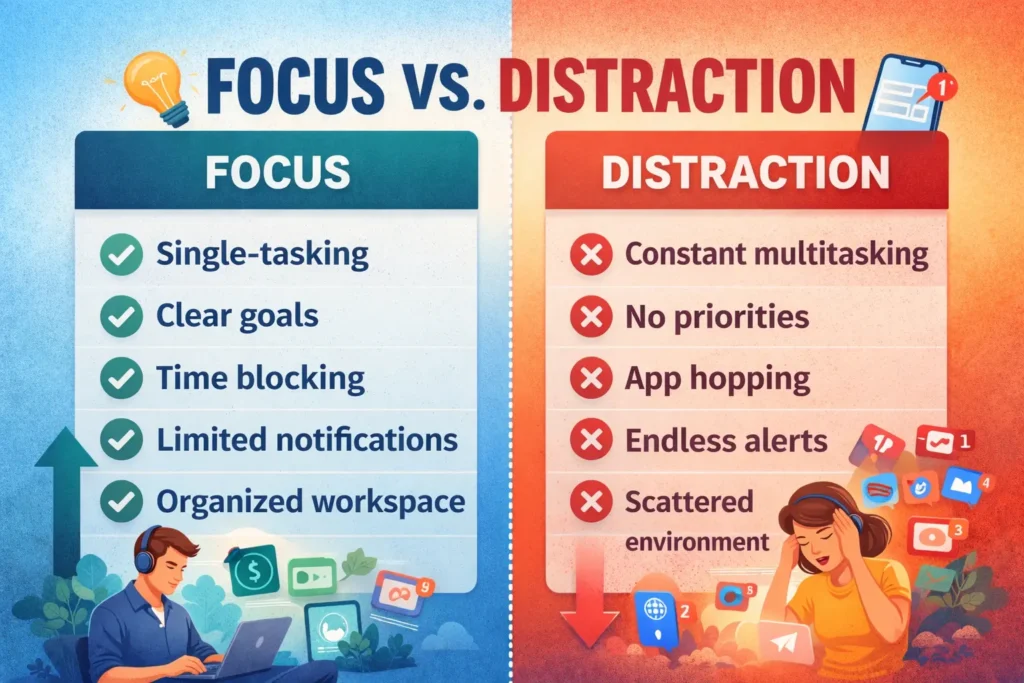
Mindful multitasking and focus techniques help to shift from scattered work habits to intentional and efficient performance. Even though it may seem productive to always be switching between apps, tabs, and tasks, it actually causes the brain to reset over and over, which makes thinking slow and error-prone.
Practicing mindful tech habits involves knowing when to single-task and dedicating one activity to your full attention before moving on to the next. Techniques such as time blocking, batching tasks, or working in short and concentrated intervals can enhance concentration and minimize mental fatigue. Silencing unnecessary notifications and closing unrelated tabs removes temptations that compete for attention.
Instead of learning too many things at once, mindful workers set priorities and work on them in a logical order, which enables them to engage more deeply and yield better results. Over time, these strategies teach the mind to maintain focus for increasingly longer periods of time, and work can become not so chaotic but controlled, both in terms of productivity and quality of work completed.
End-of-Day Tech Rituals for Digital Wellness
End-of-day tech rituals are an important part of digital wellness as they can help your mind shift from work mode to personal time. Without a clear stopping place, it’s easy to check emails, review tasks, or scroll through updates long after work should be completed.
Creating a simple shutdown routine, such as closing your work tabs, laying out tomorrow’s priorities, and logging out of professional accounts, can signal to your brain that the workday is over. Dimming down screens, turning on night settings, or putting them away an hour before bed can also help when it comes to better sleeping and mental recovery.
Some people benefit from short reflection exercises, such as noting accomplishments or lessons learned, to create a sense of closure. These intentional habits prevent digital spillover into rest hours, reduce stress, and protect personal time. With time, steady evening tech rituals make recharging easier, keeping a balance, and beginning the following workday with clarity and renewed attention.
Conclusion
Building mindful tech habits is one of the most practical ways to create a balanced, productive workday within a digital-driven world. When you use technology with purpose, setting limits, taking breaks, and focusing on one task at a time, you go from reacting with the devices to directing them.
These may be little but consistent choices like these protect your attention, reduce stress, and improve the quality of the overall work. The goal isn’t to shun technology but to learn to have a healthier relationship with it. By making a single, mindful change today, you can steadily change your daily routine and make it one that benefits your professional success as well as your personal well-being.
FAQs
What are mindful tech habits?
Mindful tech habits are purposeful ways of using digital devices in ways that promote productivity and well-being, rather than distraction or stress. They comprise deliberate decisions about when, why, and how you engage with technology.
How can mindful tech habits improve productivity?
They help you to reduce distractions, minimize task-switching, and concentrate on one task at a time, which increases efficiency and improves the quality of work.
Can mindful technology use reduce stress?
Yes. Structured use of devices avoids digital overload, which can reduce mental fatigue and contribute to emotional balance throughout the workday.
Are mindful tech habits useful for remote workers?
Absolutely. Remote work often leads to more screen time, so using technology intentionally helps to sustain boundaries and avoid burnout.
Do mindful tech habits help with work-life balance?
Yes. Setting digital limits after work hours helps to ensure that you are properly disconnecting from work and have time for rest and personal activities.