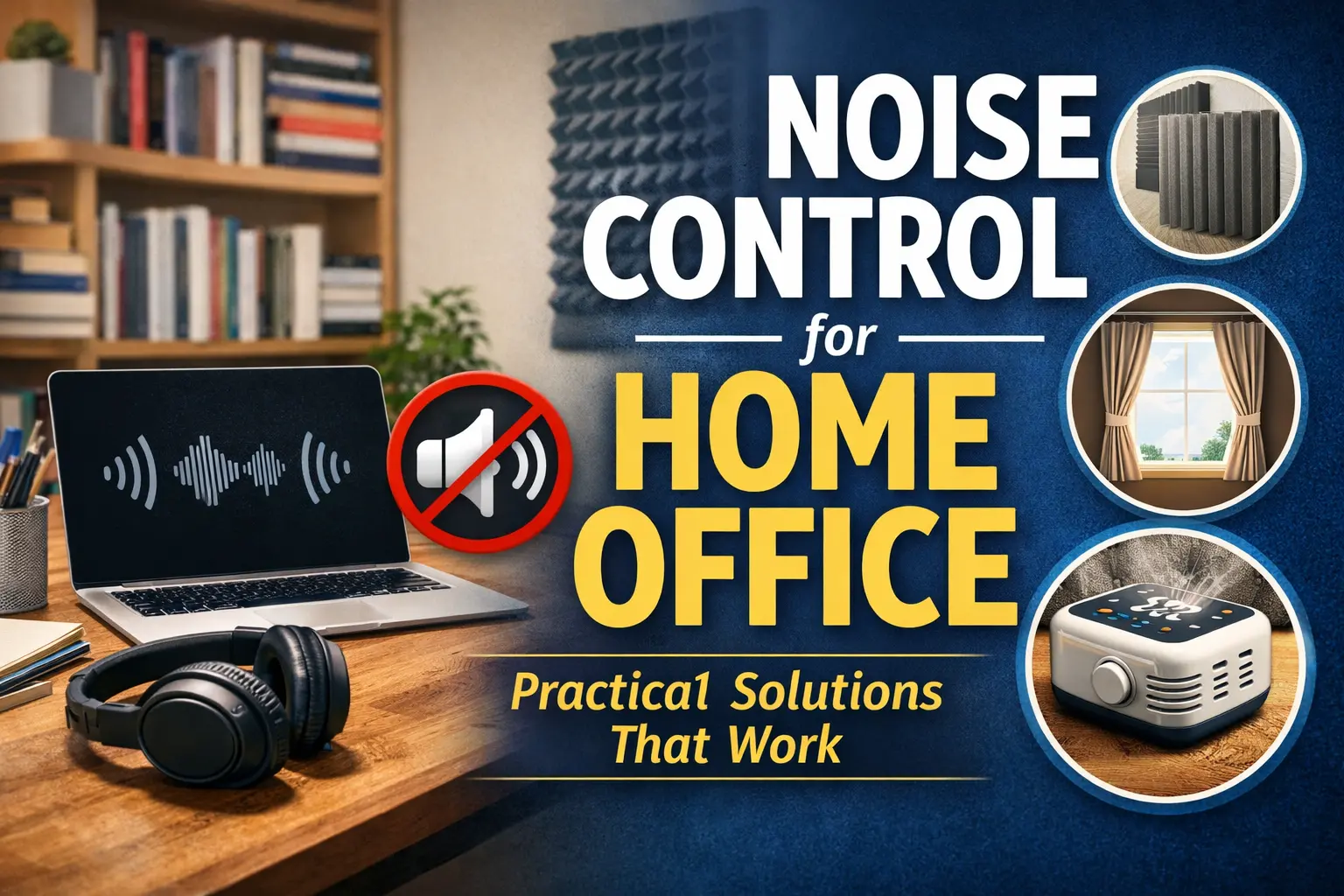
Working from home is a great option for flexibility, but unwanted sound can easily negate focus, productivity, and comfort. From traffic outside to conversations in the next room, it is easier to get distracted and not concentrate and be efficient. That’s why effective noise control for home office setups has become essential rather than optional.
A quiet workspace doesn’t necessarily have to involve costly renovations, a few tweaks and smart design choices could go a long way. Whether you’re at meetings frequently, content needs to be recorded, or some tasks require deep concentration, controlling background noise helps to create a calmer, more professional environment that supports consistent performance and reduces the work stress of your day.
Why Noise Is a Serious Problem in Home Workspaces
Noise can be a major productivity interferer in home workspaces, even when it may not seem minor or temporary. Background noise, such as traffic, household activity, and television, cannot be avoided and causes cognitive interruptions that require the brain to refocus, which is inefficient and leads to mental fatigue. Studies show that unpredictable noise is especially damaging due to its disruptive effect on concentration cycles and its slowing effect on task completion.
Over time, non-stop distractions may also cause stress levels to increase and work quality to decrease. Unlike traditional home offices that are acoustically designed, most homes are not built for quiet work. Without proper management of sound, noise that deals with daily life can make a comfortable home setup a frustrating and exhausting work environment for professionals.
Understanding the Types of Noise at Home
Not all household noise is created equal, and determining what type it is is the first step towards controlling it effectively. Airborne noise is carried by the air, from conversations, music, or traffic sounds from outside. Impact noise is generated by physical vibrations, such as footsteps, dropping things, or furniture movement on the floors.
Structural noise travels through walls, ceilings, or plumbing systems, which frequently has the characteristics of sounding like humming, banging, or echoing. Each type acts differently and must be treated with specific solutions instead of a catch-all solution. Understanding these categories can help you to make more targeted choices in minimizing distractions with greater efficiency and in creating a quieter, more productive home office environment.
Noise Control for Home Office
Improving noise control for home offices doesn’t always require major renovations. Here are practical, easy-to-implement solutions:
- Reposition Your Desk: Place your workspace away from doors, windows, or high-traffic areas to reduce exposure to outside noise.
- Seal Gaps: Use draft stoppers or rolled towels under doors to block sound leaks.
- Soft Furnishings: Rugs, curtains, and cushions help absorb echoes and dampen ambient noise.
- DIY Barriers: Bookshelves or room dividers can act as physical sound buffers along shared walls.
- Turn Off Unnecessary Electronics: Small devices like fans or humidifiers can produce low-level noise; turn them off when not needed.
- Use Noise-Canceling Headphones or White Noise Apps: For immediate relief, these tools mask distracting sounds effectively.
These quick fixes are affordable, easy, and surprisingly effective for creating a calmer, more focused home office environment.
Budget-Friendly Soundproofing Methods
Creating a quieter workspace doesn’t have to be expensive if you consider the right materials and placement strategies. Budget-friendly soundproofing methods can significantly improve noise control for home office setups without major renovations. DIY Acoustic Panels Made from fabric and foam to absorb echoes, or weatherstripping around doors and windows to block the sound outside the room.
Thick curtains, wall tapestries, and mounded rugs can minimize reflected sound and soften room acoustics. Even crammed bookshelves can serve as natural sound barriers from shared walls. These affordable solutions work best when used together so that you can reduce distractions, reduce the lack of clarity during calls, and focus on your environment, without having to spend a lot of money.
Professional-Level Noise Reduction Solutions
For those needing stronger results, professional-level upgrades can dramatically improve noise control for home office environments. Installing mineral wool or high-density acoustic panels will help to minimize echoing and will help to block out mid-range sound frequencies better than basic foam. Door seals and automatic door sweeps help to prevent sound leaking through gaps, and double-glazed windows reduce external noise, such as traffic or building works.
The interior walls should be insulated with one of the most effective long-term solutions to shared spaces. Though these options are more of an investment, they offer consistent quiet, better clarity of speech for meetings, as well as more control over the acoustic environment for recording, broadcasting, or deep concentration tasks.
Choosing the Right Furniture for Sound Absorption
Furniture has a larger role in acoustics than most people would realize. Soft dense materials absorb sound waves, whereas hard surfaces reflect sound waves and give rise to greater echo. Upholstered chairs, fabric sofas, and padded headboards help reduce reverberation, making them useful additions for better noise control for home office setups.
Bookshelves full of books or storage boxes can serve as sound barriers when against shared walls. Even a fabric desk mat or wall hanging can help to soften reflections near your workspace. Choosing furnishings that have texture and thickness enhances the overall level of sound absorption, helping to produce a quieter environment that is better for clear call handling, focus, and listening fatigue.
Tech Tools That Help Block Noise
Technology can make a noticeable difference if physical soundproofing is not enough. Noise-canceling headphones are one of the best tools that use active sound control to quiet noise and increase concentration. White noise machines and sound-masking apps provide a constant, steady level of sound to help cover the ears against distracting interruptions, such as voices or traffic.
Directional microphones can also help in improving call clarity by filtering out unwanted sound. For better noise control for home office productivity, combining these tools with basic acoustic adjustments works best. They offer flexible and portable solutions that enable you to stay focused, communicate clearly, and work comfortably even in environments that aren’t inherently quiet.
Room Layout Strategies for Maximum Quiet
Room layout is a very important factor in sustaining a peaceful work setting. Your desk should be positioned as far away from noise sources as possible (e.g., doors, windows, shared walls). Corners also tend to enhance sound reflections, so keeping your setup a little off-center helps improve sound. Use heavy pieces of furniture, such as wardrobes or bookcases, on walls with loud noise to act as sound buffers.
Dividers or folding screens can also be used to reduce the travel of sound in shared rooms. For better noise control for home office performance, think strategically about spatial arrangement rather than relying only on materials. A well-thought-out layout provides a natural way to reduce distractions and create a less noisy, more focused working environment.
Common Noise Control Mistakes to Avoid
When improving noise control for home offices, some common mistakes can reduce effectiveness. A lot of people mistake sound absorption for soundproofing, implementing foam panels in a building without addressing the gaps in doors or windows. Overloading walls with acoustic foam can be costly, visually overwhelming, and not very beneficial.
Ignoring floors, ceilings, and the placement of furniture leaves major noise paths untreated. Relying on headphones without correcting actual noise sources can cause ear strain over time. In addition, not using the combination of simple DIY fixes and structural solutions also limits results. Avoiding making these mistakes is key to making sure your efforts result in a truly quieter, more productive home workspace.
Best Long-Term Strategy for a Quiet Workspace
The most effective long-term approach to noise control for home office combines structural and acoustic strategies. Start with insulation, door seals, and double-glazed windows to keep out the noise both in and out. Layer acoustic treatments such as panels, rugs, and soft furnishings to absorb residual sound reflections.
Strategically position furniture for natural boundaries and ideal room acoustics. Complement these changes with consistent habits, such as scheduling noisy activities outside of work hours and using noise-canceling devices when necessary. By focusing on several sources at once, this layered approach provides you with long-term quiet, enhanced focus and productivity, and turns your home office into a professional distraction-free environment.
Final Thoughts
Effective noise control for home office isn’t just about comfort; it directly impacts focus, productivity, and overall work satisfaction. Simple adjustments, budget-friendly fixes, and professional solutions all have a role in creating a quieter environment. Combining acoustic treatments, smart placement of furniture, room layout strategies, and technology tools can ensure long-lasting results.
Avoiding common mistakes, such as excessive use of foam panels or neglect of gaps, further enhances the effectiveness. Whether you’re working, having virtual meetings, or creating content, a properly planned and layered approach to noise management helps turn your home office into a place where you can concentrate, de-stress, and perform your work professionally every day.
FAQs
What is the best way to achieve noise control for home office?
Combining soundproofing, acoustic treatments, furniture placement, and technology tools such as noise-canceling headphones provides the most effective results.
Are acoustic panels worth it for home office?
Yes, they absorb echoes and mid-range frequencies, which helps you have a better conversation and provides a quieter workspace.
Can rugs and curtains really reduce noise?
Yes, soft materials absorb the sound reflections and reduce reverberation, and enhance focus.
How do I make a small home office quieter without renovations?
Reposition your desk, seal gaps under doors, add soft furnishings, and use noise-canceling headphones or white noise apps.
What common mistakes should I avoid when trying to reduce noise?
Relying solely on foam panels or neglecting to close gaps in doors and windows or a lack of combination of multiple strategies often limits results.