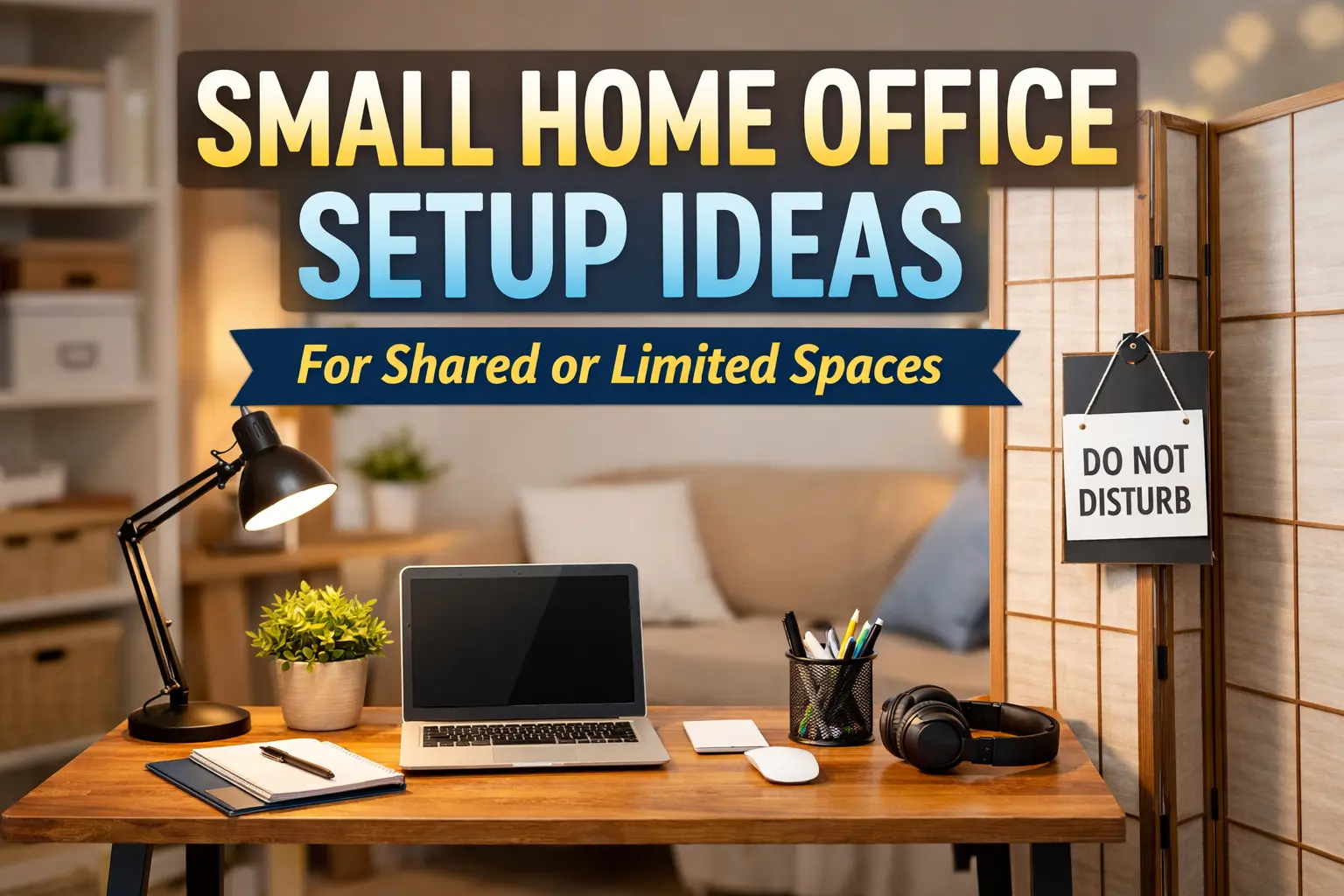
Creating a working space in a confined space or sharing space can be daunting, especially with more people working or studying from home. The good news is that through smart planning and the correct design choices, even the smallest of corners can be made productive and comfortable.
If you share a room, live in a small apartment, or simply don’t have a dedicated office, creative ways of putting unused spaces to work can make anything a place to work effectively. These small home office setup ideas focus on maximizing space, reducing clutter, and maintaining comfort without costly renovations. With the right approach, you can create a work environment that supports focus, matching your space, and that can blend seamlessly with your daily living space.
Why Smart Planning Matters in Small Workspaces
Smart planning is vital when it comes to designing a small workspace, as this will have a direct effect on productivity, comfort, and organization. In small spaces, every inch is precious, and thoughtful planning decisions about furniture, storage, and equipment should be made to ensure that things fit well without overcrowding.
Thoughtful layout of desks, shelves, and lighting minimises clutter and distractions and allows for ergonomic principles to support posture and protect against strain. Planning also opens up possibilities for multi-functional solutions, such as foldable desks or vertical storage, which make the most of the utility in the limited space. By keeping functionality, accessibility, and aesthetics at the forefront, smart planning makes even the tiniest of spaces a productive, comfortable, and visually appealing home office.
Best Locations to Create a Small Home Office
Corner office setups
Corner office setups are a great way to take advantage of space that one might not normally use and turn it into a productive work area. A small desk, wall shelves, and adequate lighting can make a simple corner a workable workstation. This makes your setup organized, there is limited distraction, and they can be adequately accommodated in the shared/limited room without crowding the floor.
Closet-turned workstations
Closet-turned workstations provide an intelligent way to create a private workstation without taking up additional space. Add in a thin desk, shelves, and lights, and you have a small home office in an otherwise unused closet. No work when the day is done, just close the doors to conceal clutter and keep your shared space neat.
Under-stairs workspace
An under-stairs workspace takes an often-neglected space and turns it into a usable mini office. With a customized desk, in-built shelves, and a focused light, this spot can prove surprisingly efficient. It keeps the workspace separate without needing to occupy the main living space, making it ideal for small houses or shared spaces.
Bedroom dual-purpose desks
Bedroom dual-purpose desks aid in maximizing small spaces. This way, the desks are both a work table and a personal table. A compact design and storage help keep essentials in order and not clutter the room. This configuration integrates very well with bedroom furniture, which means that you can alternate between rest and productivity, while still feeling comfortable and efficient.
Living room hidden desks
Living room hidden desks offer a smart solution that will allow you to get the work done without disturbing your shared space. Fold-out desks, cabinet workstations, or wall-mounted units can vanish when not in use. This ensures that the room is neat and stylish, but at the same time provides a designated space for more focused tasks during the day.
Space-Saving Furniture Ideas
When you choose furniture for a small workspace, especially in shared or smaller spaces, choosing the correct furniture is vital. Smart choices help to keep the room comfortable, orderly, and mobile without feeling crowded. The key is to focus on multifunctional, compact, and vertical designs to be as efficient as possible while staying small.
- Foldable desks: Can be tucked away after work hours.
- Wall-mounted tables: Save floor space and keep layouts open.
- Ladder desks: Combine storage and workspace vertically.
- Storage ottomans: Provide seating and hidden compartments.
- Slim rolling carts: Add movable storage without bulk.
Storage Solutions for Limited Areas
Effective storage is critical in terms of keeping a small workspace functional and clutter-free. In small spaces, vertical and hidden storage methods work best due to the space utilized when it would otherwise be wasted. Wall shelves can help to hold books and supplies without cluttering up the desk, while under-desk organisers can help to keep essentials within reach.
Floating cabinets and pegboard provide storage without occupying space on the floor and help the room feel open and organized. Multi-functional furniture, such as desks with built-in drawers or slanted benches with storage compartments, also maximizes efficiency. By being smart about where and how you store your work, you can create a neat layout that helps you be productive, all while fitting into even the smallest of shared spaces.
Lighting Tips for Small Workspaces
Proper lighting is essential for small home offices because it improves focus, lowers eyestrain, and can make small spaces appear larger. Whenever possible, you should place your workplace near a source of natural light, such as windows, to lighten up the room. For corners or windowless spots, use adjustable clip-on lamps or LED desk lights to shine light where it’s needed most.
Wall-mounted or under-shelf LED strips do not waste desk space and evenly distribute lighting. Avoid harsh overhead lights that create shadows; consider warm or neutral tones to make the workspace inviting. Thoughtful lighting helps turn a small office into something comfortable and productive.
Tech Essentials That Don’t Take Space
In a small home office, selecting tech essentials that will save space is the key to keeping the office clutter-free. Compact wireless keyboards and mice reduce cable clutter, while laptop stands put your device up high for more ergonomics without needing extra surface space. A slim, portable monitor can help you get more screen space without taking over your desk.
Cable organizers and charging stations are a great way to keep cables neat and accessible without tangles occurring in tight setups. Noise-canceling headphones or small desk speakers increase focus without bulky equipment. Prioritizing space-efficient tech doesn’t mean that your small workspace has to be unworkable, disorganized, and uncomfortable, even if you are in an area with multiple people and/or limited space.
How to Maintain Privacy in Shared Spaces
In a home environment shared by multiple people, maintaining privacy is a necessary part of focus and productivity. Room dividers, folding screens, or curtains can provide a visual boundary, separating your workspace from your living space. Noise-reducing tools such as rugs, acoustic panels, or headphones are beneficial in keeping distractions to a minimum.
Clear signals, such as “Do Not Disturb” signs or work hours agreed upon, let others know when you need time that will not be interrupted. Positioning your desk strategically, facing away from high traffic areas or towards a wall, also promotes privacy. Combining physical barriers, a sound management strategy, and clear communication can ensure that in a shared or limited space, you can work well without interruption.
Budget-Friendly Small Home Office Setup Ideas
Creating a home office on a budget is completely feasible by making the right decisions and being creative in your selections. Repurposing furniture, like using an old table or dresser to hold your desk, is a great way to save money and be functional. DIY shelving or storage solutions maximize vertical space without expensive cabinets.
Inexpensive decor, such as plants, wall art, or minimal accessories, can make the space personal without cluttering it. Compact and second-hand ergonomic chairs are a more affordable way to be comfortable. Prioritizing essential items and limiting unnecessary purchases helps keep the setup simple but effective. With careful selection and creativity, a small home office on a budget can be practical and inviting.
Common Mistakes to Avoid
When organizing and setting up a small home office, some mistakes can make you less productive and/or less comfortable. Oversized furniture may overwhelm precious spaces and cause a lack of space for movement. Poor lighting choices, such as harsh lighting from overhead lights or dim corners, can lead to eye strain. Ignoring ergonomics, such as chair height or the placement of a monitor, may cause discomfort or posture problems.
Cluttered desks and excessive decor are a distraction; a lack of storage solutions produces disorganization. Avoid having your workspace in high-traffic or noisy areas. By being aware of these common pitfalls, you will be able to design a small home office that is functional, comfortable, and conducive to productivity, even in tight or shared spaces.
Styling Tips to Make Small Offices Feel Bigger
Styling a small home office space to appear large includes well-thought-out design and color choices. Light-colored walls and furniture can give an open, airy feel, and mirrors can reflect the light and add depth. Vertical storage and tall shelving make the eye follow up and make them feel bigger. Minimalist decor eschews visual clutter and keeps the area organized and calming.
Transparent or thin furniture, such as acrylic chairs or glass desks, helps reduce visual weight. Strategic use of plants and artwork adds an element of personality almost without overwhelming the workspace. Through the combination of light tones, vertical elements, and minimalism, even the smallest office can appear bigger, welcoming, and productive.
Conclusion
Designing a small home office in shared or limited spaces does not need to be a challenge. With careful planning, furniture that saves space, clever storage, and adequate lighting, even small spaces can become productive and comfortable workspaces. Incorporation of tech essentials, privacy, and styling techniques (light colors, vertical designs, etc.) adds to enhanced functionality.
Avoiding common mistakes will ensure that your setup is organized and efficient. By applying these small home office setup ideas, you can create a workspace that supports focus, reduces stress, and blends seamlessly with your living environment, proving that limited space doesn’t mean limited productivity.
FAQs
What is the best desk for a small home office setup?
Compact, foldable, or wall-mounted desks are best, as they can conserve space and offer a practical work surface. L-shaped or corner desks may also make as much use as possible of unused corners.
How can I fit a home office in a bedroom?
Use dual-purpose desks, under-the-bed storage, or a closet turned workspace. Keep the desk next to a natural source of light and keep the decoration minimal to keep the room open.
Can a small workspace be ergonomic?
Yes, with the aid of a slim ergonomic chair, adjustable monitor or laptop stand, and proper desk height, little setups can support comfort and posture.
How do I maintain privacy in shared spaces?
Room dividers, folding screens, noise-canceling headphones, and clear “Do Not Disturb” messages help to establish visual and acoustic boundaries.
What are some budget-friendly small home office ideas?
Repurpose old furniture, create DIY shelves, leave decor to a minimum, and shop second-hand or ergonomic compact chairs to save money while remaining functional.